Your First Lesson at Era Pickleball: A Beginner’s Guide
Walking into Era Pickleball for the first time, I felt the familiar mix of anticipation and trepidation that accompanies any foray into a sport with a steep but welcoming learning curve. The facility greeted me with bright banners, the soft thud of balls echoing across the hardwood, and the kindest form of competition I know—people who want you to get better as much as they want to win. I did not know then that my first lesson would reveal not just the basics of a paddle sport but a blueprint for how to learn anything difficult with grace, structure, and a dash of stubborn persistence.
Era Pickleball has a reputation for accessibility and a community that feels a little like a neighborhood that you stumble into on a weekend and decide to stay. My first impression was simple: the space is designed for beginners. There are well-marked courts, clearly explained rules on the walls, and coaches who speak in concrete terms without ever talking down to newcomers. The staff are not merely there to enforce the rules; they want you to understand why those rules exist and how small adjustments can yield meaningful improvements. By the end of the session, I left with a set of concrete takeaways that still guide my practice today.
What the first lesson covers, and what it does not
A good beginner lesson at Era Pickleball starts with intent. The coach I worked with began by asking what drew me to the sport. Was I chasing cardio? Social interaction? A mental challenge? The answer mattered because it shaped how we approached the day. If you come expecting a rapid-fire tutorial that dumps every rule and shot into your brain in an hour, you’re likely to leave frustrated. A thoughtful beginner lesson is more like a map. It gives you landmarks—the serve, the return, the dink, the overhead—and then shows you how those landmarks connect.
We began with the simplest mechanics: grips and stance. The coach demonstrated two common grips and explained how each affects control, power, and maneuverability. There’s a real art to choosing the right grip for your style, and you’ll hear a lot of conversation about grip pressure, paddle angle, and weight distribution. The practical upshot is that you don’t need to master every nuance on day one. The goal is to establish a baseline that prevents injuries and makes your next practice predictable rather than a guesswork fiasco.
The court, the rules, and the etiquette
Era Pickleball courts benefit from careful design. They are scaled for learning, with lines clearly visible and nets at the right height. The first rules you’ll learn are not about scoring for the sake of scoring but about safety and flow. The serving sequence, the non-volley zone (the kitchen) rules, and how to volley only after the ball clears the net are all explained in practical terms. Even as a beginner, you can start playing right away if you accept the tempo of a guided session. The etiquette is simple and nonthreatening: stay behind the baseline while your opponent serves, call out lines honestly to avoid disputes, and help others keep the pace by moving promptly between points. The culture at Era Pickleball emphasizes support more than superiority; the tone of instruction is patient, specific, and oriented toward improvement rather than bravado.
The anatomy of a rally in the early days
If you watched a beginner’s rally at Era Pickleball, you’d notice the rhythm is different from more advanced play. In my first lesson, the coach deliberately slowed the pace and poured attention into predictable patterns. The dink, a short, soft shot that lands in the kitchen, becomes the anchor. The dink is not a lazy shot; it’s a tactical tool to inject pace control, force your opponent into uncomfortable positions, and create windows for a more aggressive shot later. My early rallies looked awkward, with misjudged bounces, overhitting, and a few embarrassing moments where the ball felt as if it had been magnetized to the net. Yet those moments were essential learning points. Each error revealed a lever I could pull to improve—footwork, paddle face, or the timing of a swing.
The most practical approach for a complete beginner is to adopt a few habits and then gradually layer on sophistication. For instance, you learn to reset after a deep return by moving your feet rather than your shoulders. You learn to keep the paddle up and center your body over the ball. You learn to read the ball’s path early so your racquet meets it closer to your center of gravity rather than reaching out, which invites mishits. You learn to adjust your stance as you approach the kitchen, shifting from a wide, battle-ready stance to a more compact, controlled posture for dink returns. It is all nested in the simple aim of keeping the ball in play and reducing unforced errors.
Two practical lists to guide your first weeks
While prose is your friend in the early days, a couple of concise checklists can be remarkably helpful. Here are two lists I wish I had on day one. They are intentionally compact so you can memorize them without feeling overwhelmed.
-
Gear essentials for new players: 1) Court-appropriate shoes with good traction 2) A comfortable paddle within your grip and weight preferences 3) A water bottle and towel for staying hydrated and dry 4) Sunscreen or indoor lighting considerations if you practice outdoors 5) A willingness to experiment with grip and stance to find what feels natural
-
Common beginner pitfalls to avoid: 1) Reaching with the paddle rather than stepping into the ball 2) Overhitting on returns when a gentler touch would suffice 3) Trying to dunk every dink instead of placing it with intention 4) Ignoring footwork drills that seem mundane but matter 5) Forgetting to communicate and calling lines when fatigued
In practice, these micro-distinctions matter. The footwear you pick is less about fashion and more about how your feet grip the court under stress. The right paddle weight can determine whether you feel reactive or sluggish. Small changes in grip pressure can transform a mishit into a controlled return. The lists above are not commandments; they are guardrails to keep you moving forward without getting discouraged.
Learning to read the court and the decision tree
A meaningful portion of the first days involves reading the court and building a decision tree that informs every shot. You begin to anticipate where the ball is likely to go based on where the opponent stands and how they are hitting the ball. You quickly learn that the kitchen is not a trap for everyone; it is a strategic zone that rewards careful, patient play when your opponent lacks speed or depth. If you push too aggressively from the kitchen, you risk being forced off balance or hit with a sharp counter that reveals your position. So the best early strategy is to mix levels of play: a few controlled dink exchanges to set up a deeper shot, followed by a well-timed lift or volley when your opponent is out of position.
The coach’s voice is a crucial compass in this early phase. They’ll emphasize a few core ideas: keep the paddle in front of your body, step into the ball with your hips and shoulders aligned toward your target, and maintain a relaxed grip that allows for rapid adjustments. The emphasis on fundamentals helps beginners feel confident while gradually introducing more nuanced preferences—like whether to employ a backhand or forehand dink depending on how your opponent is situated.
Practical drills you can try after the first lesson
A good beginner session ends with a set of drills designed to solidify the day’s lessons. The drills are short, repeatable, and designed to fit into a crowded schedule, which is exactly what Era Pickleball is built for: a community that practices regularly and values incremental gains. Here are a few that worked for me and many others I have watched over the years:
- Wall rally and control: spend ten minutes hitting against a wall to rehearse your dink and reset technique. The goal is consistency, not power. You’ll learn to modulate your paddle face to keep the ball light and in play.
- Partner rally with a focus on footwork: with a partner, practice a 60-second rally where you move your feet to the ball rather than leaning or reaching. The pace is slow at first, and you build a rhythm that reduces mis-hits.
- Target practice: place small targets on the court and attempt to land balls in those zones. This helps you understand angle and depth without needing effortless power.
- The kitchen drill: a controlled dink-to-dink exchange at the net height with a goal to keep the ball low and short of the opponent’s reach. It trains you to maneuver within the kitchen without overcommitting.
- Return-to-center: after every shot, move back to the center of your side of the court so you can react to the next ball from a balanced position. This drill reinforces posture and balance, two pillars of reliable play.
The social fabric that makes Era Pickleball distinctive
What sets Era Pickleball apart is not only the court design or the instructional methods but the social fabric that accompanies the sport. The facility is built around a community ethos that values newcomers as much as it does seasoned players. The coaches are approachable, often sharing a personal anecdote about their own early missteps to illustrate a point. That openness helps new players feel less exposed and more curious. It’s not only about how to swing a paddle; it’s about how to approach learning as a process, how to handle feedback, and how to celebrate wins that might be small but meaningful.
I observed a few patterns in conversations that emerged naturally in the space. First, people ask practical questions about scheduling and access. Era Pickleball is known for flexible options—indoor and outdoor courts, membership packages, and the possibility of drop-in play when crowds permit. This flexibility matters for beginners who are balancing work, family, and a desire to improve. Second, the community often bonds over shared experiences, such as learning how to handle a particular shot or technique that initially baffled them. Third, there is a pragmatic respect for the game’s rules and etiquette. The most compelling players are not those who shout the loudest but those who play cleanly, with good footwork and efficient shot selection.
A note on equipment and space variables
The facility’s indoor courts provide a controlled environment that helps beginners focus on technique rather than weather or lighting conditions. Indoor lighting tends to be uniform, which makes tracking the ball easier. However, even indoors, paddle choice matters. Some players prefer lighter paddles for quicker maneuverability, especially if their goal is to reduce fatigue during long sessions. Others opt for slightly heavier paddles for more control on larger, more demanding shots. There is a delicate balance between power and control, and the right choice often hinges on your body type, swing speed, and personal preference. If you are unsure, start with a mid-weight paddle that allows you to experiment without compromising your technique.
Outdoor play introduces a different rhythm. The bounce and speed of the ball can shift when the surface is asphalt or concrete. Outdoor courts can also introduce wind, which affects shot selection and trajectory. Beginners who train in both environments quickly learn to adjust their timing and aim. In practice, the best approach is to try a few drills across both spaces to expose yourself to the variety you’ll encounter in real games. The less you cling to a single scenario and the more you adapt, the more resilient your game becomes.
A year into playing: what it looks like when you keep showing up
If you stay with Era Pickleball for a while, the path becomes less about how to execute a single shot and more about how to read the entire landscape of a point. The basics become almost automatic, freeing cognitive space for anticipation and strategy. You start to notice the recurring patterns among opponents, the tells that reveal when a player is about to shift from a conservative dink to a more aggressive drive, and the subtle ways in which footwork can create space for a shot you might not have attempted at the start.
There are still challenges, of course. Consistency remains the most persistent obstacle. Even with a strong foundation, you will have days when your timing is off, your paddle angle slips, and your feet lag behind your hands. The difference is that you now have a toolkit to diagnose and fix what’s going wrong. You have a library of drills, a map of your own tendencies, and a community that understands your struggle because they share it. The workouts evolve from a focus on technique to a focus on strategy and stamina. You learn to pace yourself during longer matches, conserving energy for the crucial late stages while keeping your decision-making sharp.
What an ideal beginner plan looks like at Era Pickleball
If you want a practical, sustainable path that respects your time and maximizes your learning, consider a plan that blends coaching, free play, and deliberate practice. A simple template you can adapt begins with one structured lesson per week, supplemented by two practice sessions that emphasize consistency over intensity. Use the first session to reinforce the day’s lessons, then the second to try new variations and challenge yourself with slightly harder targets or different partners. Over time, you’ll find that your improvements accumulate in small, measurable ways. You’ll notice your dink accuracy improves, your returns become more predictable, and your ability to manage the pace of a rally increases.
The decision to join a pickleball club or participate in leagues can be a natural next step once you’ve built a solid foundation. Era Pickleball’s club and league options offer not only competition but also social continuity. If you’re thinking about leveling up, these avenues provide structured practice, a framework to measure progress, and a social anchor that helps you stay engaged. Whether you want to sharpen your serve accuracy, test your mid-court dink under real pressure, or simply enjoy regular play with friends, there is a pathway that matches your ambitions.
A respectful invitation to newcomers
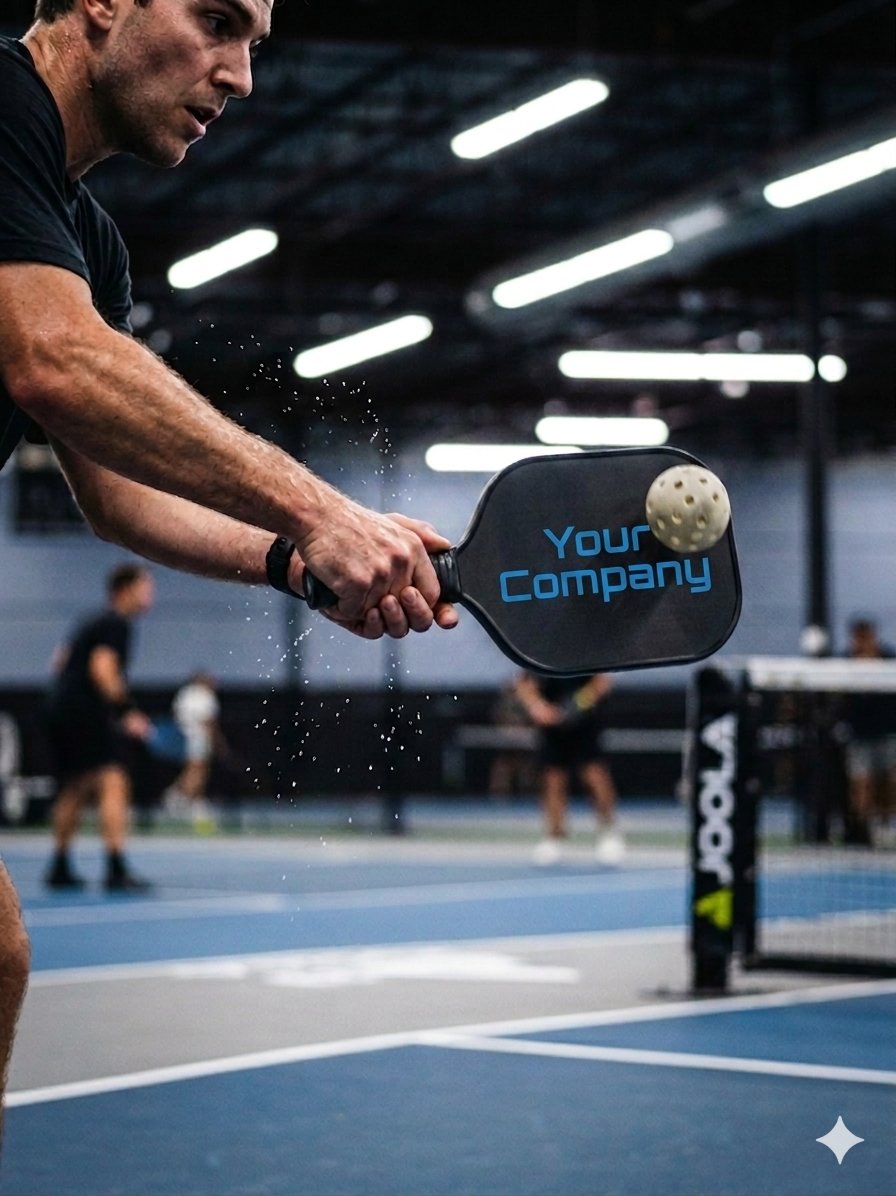
If you are contemplating your first lesson at Era Pickleball, my advice is simple and grounded in experience: show up with curiosity more than confidence, ask questions, and treat every practice as a chance to learn rather than a test you must pass. The people you meet there—coaches, staff, and fellow players—are positioned to help you build a game you can be proud of, and they understand what it feels like to be new. The sport rewards patience and attentiveness; the facility rewards those with the willingness to show up consistently and approach every session with intention.
To that end, remember the practical basics I learned on day one and still return to today. Focus on your split-step and footwork, keep your paddle in front of your center of gravity, and use the dink as a tool for shaping rallies rather than a defensive last resort. Build a simple mental map of the court: a reliable serve can win you points; a solid dink can win you the rally; a well-timed volley can seal a point. Mastery arrives when these elements weave together into a fluid, anticipatory game rather than a sequence of isolated techniques.
In the end, my first lesson at Era Pickleball was less about learning every rule or practicing a perfect shot and more about learning how to learn. The sport is forgiving enough for beginners to enjoy immediate participation, and it rewards consistent practice the way a good book rewards careful reading. The community becomes a mirror of your progress; you see yourself reflected in the faces of players who started with the same uncertainty and now navigate the court with a blend of calm, focus, and joy.
If you’re curious about the practical details you might want to know before you go, here are a few pointers that can smooth the first days:
- Check the schedule for beginner-friendly blocks and try to attend at least two sessions within the first two weeks. Consistency matters more than intensity.
- Bring a water bottle and a towel, and plan for a light snack after you finish. Hydration and energy management are often underestimated in the rush of novelty.
- Arrive early to observe other beginners and take mental notes on how they handle common situations. Watching, listening, and reflecting are powerful learning tools.
- Don’t be afraid to ask for a quick recap of a drill or an adjustment you should be making. Coaches want to hear your questions as much as your victories.
- Track your progress in a small notebook or app. Note your serve accuracy, dink depth, and rally length. It’s motivating to see numbers improve over weeks.
Closing thought
Beginners often fear they are walking into a world of advanced players who move too fast and think too strategically. Era Pickleball proves otherwise. It is a space designed to welcome, teach, and challenge you in equal measure. The first lesson era pickleball is not a finale; it is a prologue to a sustained practice that can reshape how you approach sport, learning, and community. My own journey from tentative first serves to confident rallies has been a steady climb enriched by people who care about the process as much as the outcomes. If you are considering dipping your toes into pickleball, the Era Pickleball environment offers a patient, practical, and rewarding path forward. Give yourself the time, trust the process, and you will discover a sport that teaches you as much about persistence as it does about paddle control.